Fiddle Leaf Fig Care

Fiddle Leaf Fig Care More by Amy Hovis
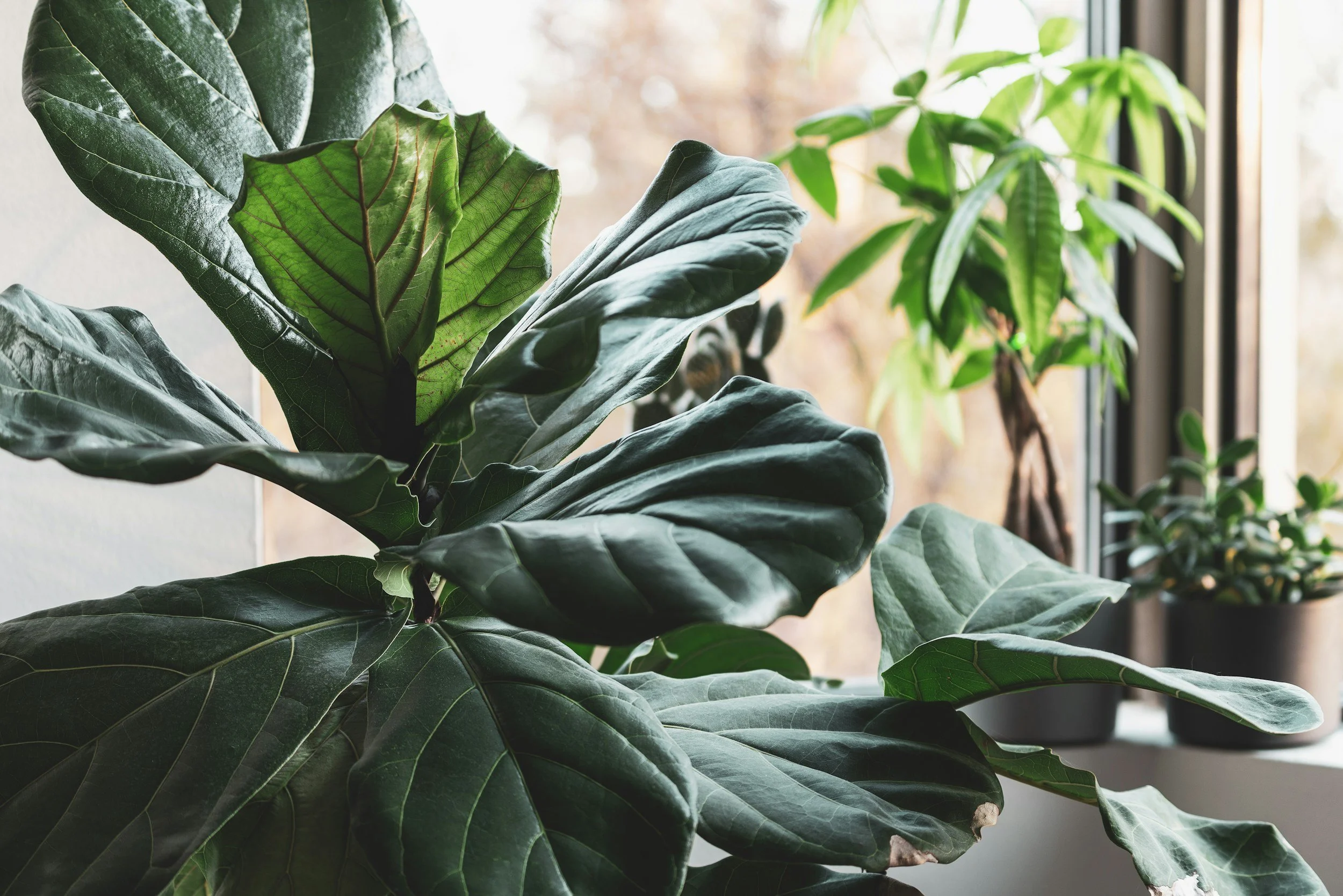
Fiddle leaf figs (Ficus lyrata) are actually one of the easiest houseplants to care for once you understand their simple needs. Give them the right placement with plenty of good light, a deep watering about once a week, and, like all houseplants, an occasional check for pests. Get those basics right, and that’s really it! They’re happiest with consistency and a little attention.
If your fiddle leaf fig is dropping leaves, don’t panic. It’s usually just a little sign that they're telling you something. Most of the time it’s responding to stress, often from watering or a change in its environment. If you’ve just bought a new fiddle leaf fig home, some leaf drop is completely normal. These plants don’t love change and tend to protest when they’re moved, so a brief adjustment period is to be expected. Once you place it, think of that as its forever spot. Fiddle leaf figs are happiest when they stay put and get plenty of bright light, ideally near a sunny window.
If your plant has been happy for a while and suddenly starts dropping leaves, watering is usually the first thing to look at. The leaves will give you clues. Yellowing, droopy leaves often mean it’s getting too much water, while crispy brown edges and dry leaves suggest it’s been a little too thirsty. It’s also completely normal for older bottom leaves to fall off as the plant grows, so not every dropped leaf is a cause for concern. In general, fiddle leaf figs like a deep, thorough watering about once a week, as long as the pot has good drainage.
Beyond watering, these plants are sensitive souls when it comes to light, temperature, and humidity. Too little light can cause leaf drop, while a sudden blast of intense sun can scorch leaves. Cold drafts from windows, air conditioning, or heating vents can shock them, and even repotting or rearranging their location can trigger temporary leaf loss. Occasionally, pests like spider mites or mealybugs may be the culprit, or the plant may need nutrients, especially if it’s become rootbound.
To keep things happy, check the soil by sticking your finger a few inches down and only water when it feels dry, take a quick peek under the leaves for pests, and make sure your fiddle leaf fig is soaking up bright, indirect light without sitting in a draft. In short, yellow and limp leaves usually mean too much water, crispy brown leaves mean too little, and a sudden leaf drop often just means your plant is adjusting. With a little patience and consistency, it will settle in and thrive.
Another note: This was my gateway plant. I brought a practically dead one from my daughter, Sophie’s first apartment because it looked dead and I wanted the pot it was in. It was a stick with one half dead leaf. I gave it a good home in a sunny spot and started to simply water it once a week. Watching it pop out GIANT leaves from just a stem was MAGICAL. I was hooked. They are glorious. Watching them grow is so much fun and so easy. They will continue to pop out leaves out of nowhere - and all because you are caring for them. Here is that same fiddle leaf, years later. It's been through about five big moves (we move houses often), but she is happy. We've had to trim her down a number of times as she gets too tall for our ceilings. She even lived in a trailer for a year. She's no drama queen. She's tough. They all are.