Two of my absolute favorite shrubs for winter berries are American beautyberry (Callicarpa americana) and yaupon holly (Ilex vomitoria). Both are native to Texas, incredibly beautiful in the landscape, and wonderful examples of how we can design gardens that are just as valuable to wildlife as they are to us.
American Beautyberry (Callicarpa americana)
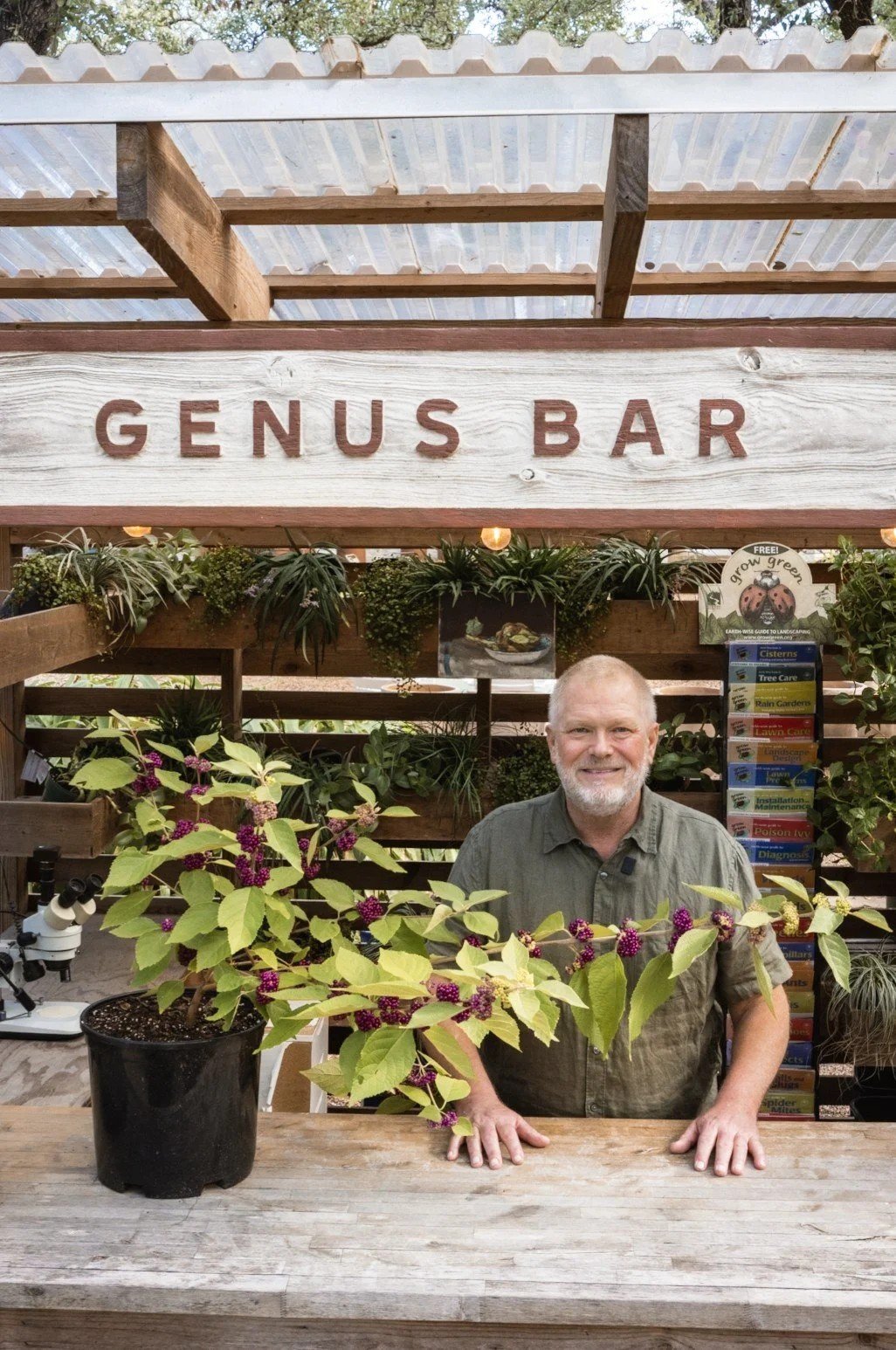
Beautyberry is one of those plants that almost seems too beautiful to be real. In late summer and fall, its graceful, arching branches become covered in extraordinary clusters of brilliant violet-purple berries. The color is almost electric, and when the leaves begin to fall away, those berries become even more spectacular. Depending on the weather and how quickly the birds discover them, the berries can persist into early winter.
I love using beautyberry in naturalistic landscapes, particularly along woodland edges, beneath the dappled shade of trees, or where its loose, sculptural form can be appreciated. It brings a softness and spontaneity to a garden that I find so much more interesting than tightly clipped, overly controlled landscapes.
And the birds absolutely love it. Mockingbirds, cardinals, robins, and other fruit-eating birds are drawn to its berries, turning this beautiful shrub into a seasonal food source.
Yaupon Holly (Ilex vomitoria)
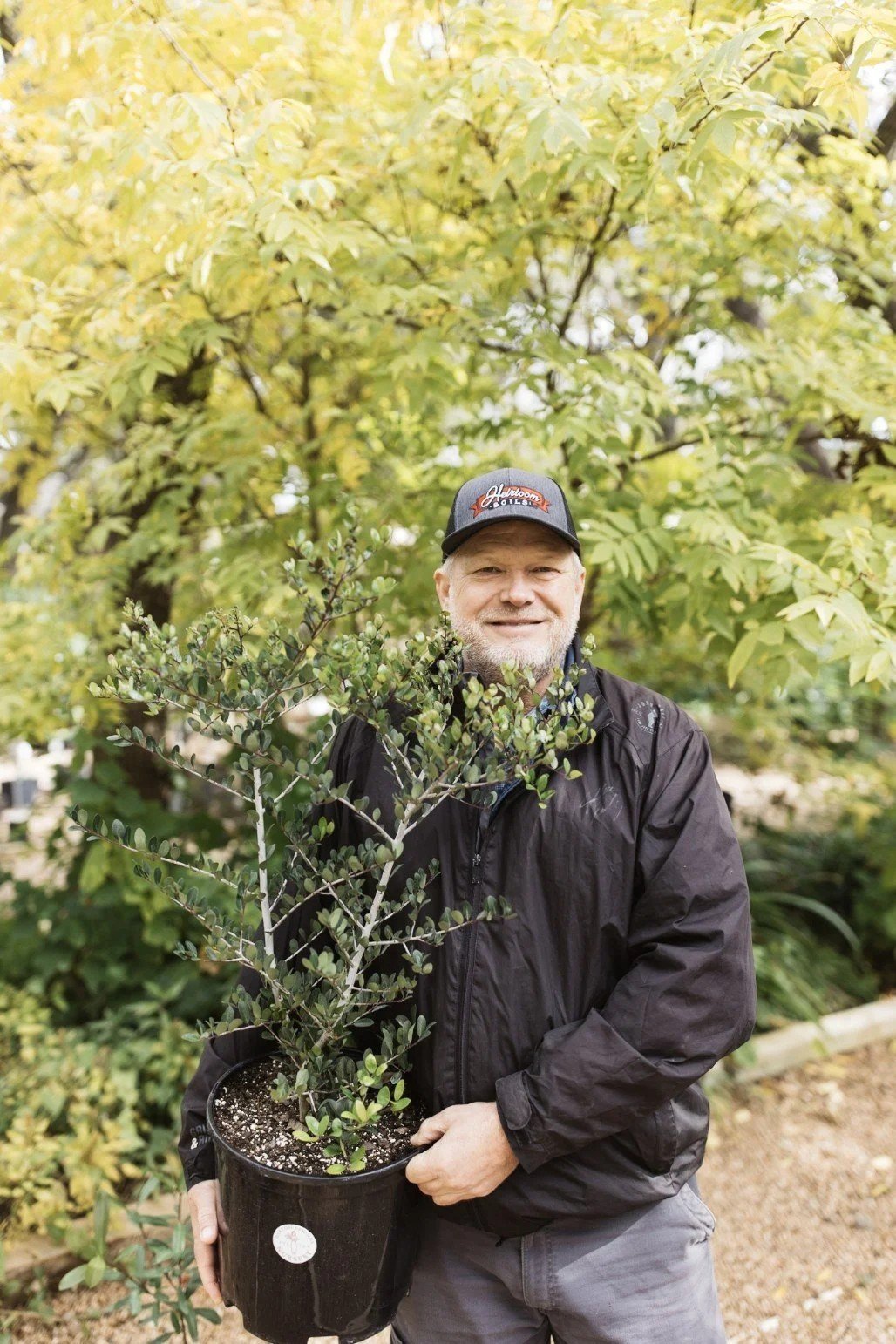
Yaupon holly is another favorite and one of the most versatile native plants we have here in Central Texas. It’s an evergreen with lovely, fine-textured foliage, and female plants produce beautiful clusters of bright red berries that can persist throughout the winter.
From a design perspective, I love the contrast between the deep green leaves and vivid red berries. Yaupon can be used as an informal hedge, a naturalistic screen, or a small ornamental tree, depending on how it’s grown and maintained. I especially love its more natural, unpruned forms.
It’s also an incredible wildlife plant. The dense evergreen branches provide shelter for birds throughout the year, while the berries offer food during the colder months, when other resources become less abundant. Mockingbirds, cedar waxwings, robins, and bluebirds are among the birds that enjoy them.
One important detail: yaupon hollies have separate male and female plants, so if you’re planting them specifically for berries, be sure to select female plants and have a compatible male nearby for pollination.
What makes a winter berry, and why are they so valuable?
When we talk about winter berries, we’re generally referring to the colorful fruits of shrubs and trees that remain on the plant into the colder months. Some, like beautyberry, produce fruit in late summer and fall that may persist into early winter. Others, like yaupon holly, can hold their berries much longer, sometimes throughout the winter.
From a design perspective, I think about two broad categories: deciduous shrubs, which lose their leaves and reveal beautiful clusters of berries along their bare branches, and evergreens, which provide year-round structure and foliage with the added dimension of colorful fruit.
Both have their place in a thoughtfully designed landscape. Winter berries bring color, texture, and seasonal interest to gardens at a time when many other plants have gone dormant. But more importantly, they provide an essential food source for wildlife.
Plant a living bird feeder
One of my favorite ways to use berry-producing shrubs is to plant them just outside a window.
Imagine looking out your kitchen or living room window on a winter morning and seeing these brilliant purple or red berries, with cardinals, mockingbirds, or a flock of cedar waxwings moving through the branches.
You’ve essentially created a beautiful, living bird feeder right outside your home. No plastic feeder, no constant refilling, just a natural food source that becomes part of the landscape itself.
And unlike a traditional bird feeder, these plants provide so much more. They offer shelter, nesting opportunities, food for pollinators during their flowering season, and a place for wildlife to exist throughout the year.
I think that’s one of the most meaningful things we can do as landscape designers. We’re not simply arranging plants to make something beautiful. We’re creating living habitats, with seasonal rhythms, changing colors, and relationships between plants, birds, insects, and people.
A garden should never feel static. It should evolve throughout the seasons, offer little moments of surprise, and give us reasons to look outside.
And there are few things more wonderful than watching birds feast on berries that you planted for them.